

DOES A GOPHER HAVE A TAIL?
Yes, gophers have tails, but they are quite different from other rodent tails. Gopher tails are short, nearly hairless, and serve specific functions related to their underground lifestyle.
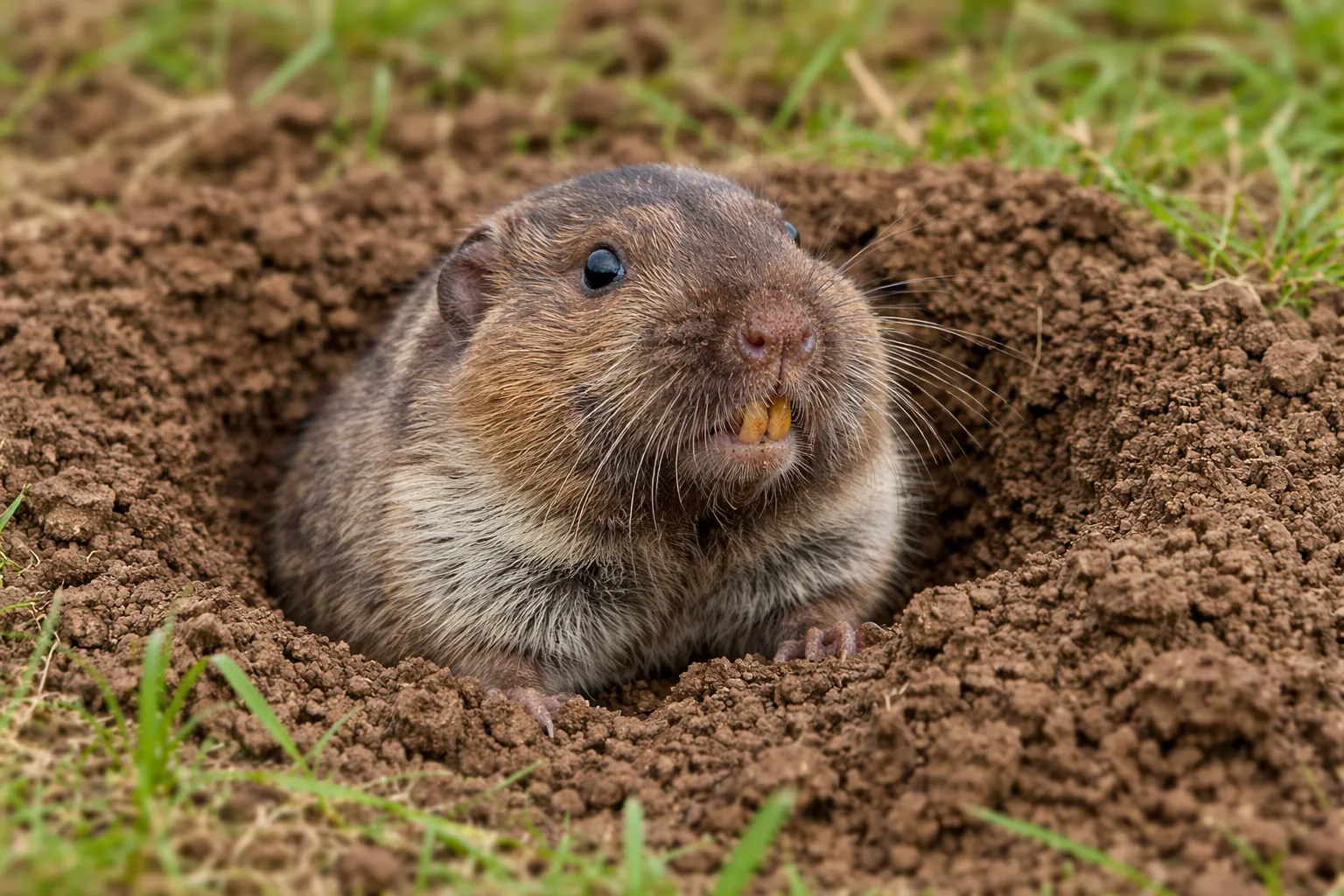
## Gopher Tail Characteristics
**Length:** Gopher tails are typically 2-4 inches long, making them proportionally short compared to the 6-10 inch body length.
**Appearance:** Nearly hairless with sparse, fine hairs. The tail appears pink to light brown and has a somewhat wrinkled texture.
**Shape:** Thick at the base and tapering to a blunt point. Not as thin or whip-like as rat or mouse tails.
**Function:** Serves as a sensory organ when gophers move backward through tunnels, helping detect obstacles and tunnel walls.
## How Gopher Tails Differ from Other Rodents
| Rodent | Tail Length | Tail Appearance | Primary Function |
|---------|-------------|-----------------|------------------|
| Gopher | 2-4 inches | Nearly hairless, thick | Underground navigation |
| Rat | 8-10 inches | Scaly, thin | Balance and temperature regulation |
| Mouse | 3-4 inches | Thin with fine hair | Balance and climbing |
| Squirrel | 6-9 inches | Bushy and fluffy | Balance and communication |
| Ground Squirrel | 5-9 inches | Moderately bushy | Balance and signaling |
## Gopher Tail Functions
**Backward Navigation:** When moving backward through tunnels, gophers use their tails as feelers to detect tunnel walls, obstacles, and direction changes.
**Tunnel Assessment:** Tail sensitivity helps gophers evaluate tunnel condition and identify areas requiring maintenance or repair.
**Emergency Detection:** The tail provides early warning when predators or threats approach from behind in tunnel systems.
**Communication:** Limited tactile communication with other gophers during mating season or territorial encounters.
## Why Gopher Tails Are Small
**Underground Adaptation:** Large tails would be impractical in narrow tunnel systems where gophers spend their entire lives.
**Reduced Vulnerability:** Short tails minimize the risk of injury from tunnel collapses, predator attacks, or getting caught in tight spaces.
**Energy Conservation:** Smaller tails require less energy to maintain and don't interfere with efficient underground movement.
**Specialized Anatomy:** Gopher bodies are optimized for digging and tunnel living rather than surface activities that require long tails for balance.
## Gopher Body Features vs Tail
**Prominent Features:**
**Less Prominent Features:**
## Using Tail Characteristics for Identification
**Gopher Identification:** Short, thick, nearly hairless tail confirms gopher species when combined with other physical characteristics.
**Distinguishing from Similar Pests:** Tail appearance helps differentiate gophers from moles (which have very short, stubby tails) and ground squirrels (which have longer, bushier tails).
**Field Identification:** In rare instances when gophers are visible above ground, tail characteristics provide additional confirmation of species identification.
## Gopher Anatomy for Homeowners
Understanding gopher physical characteristics helps property owners:
**Recognize Damage Patterns:** Body size and digging capabilities explain typical tunnel dimensions and excavation capacity.
**Identify Species:** Physical features confirm gopher presence versus other burrowing pests with different control requirements.
**Understand Behavior:** Anatomical adaptations explain why gophers remain underground and rarely appear on the surface.
**Plan Control Strategies:** Knowledge of gopher size and anatomy helps select appropriate trap sizes and placement methods.
## Complete Gopher Physical Description
**Size:** 6-10 inches long (not including 2-4 inch tail), weighing 2-5 ounces depending on species and age.
**Color:** Brown to gray fur with lighter colored belly. Color varies based on soil type in their territory.
**Head:** Large in proportion to body with prominent front teeth and small eyes positioned high on the head.
**Feet:** Powerful front claws for digging, smaller hind feet for pushing excavated soil.
**Tail:** Short, thick, nearly hairless appendage used for underground navigation and sensory input.
## Professional Gopher Identification
While gophers are rarely seen above ground, professional technicians can identify gopher activity through:
Understanding gopher anatomy, including their distinctive short tails, helps property owners recognize gopher activity and choose appropriate professional control methods.
Call 909-599-4711 for professional gopher identification and control throughout Southern California. What Is a Gopher? | Gopher vs Mole | All Guides | Gopher Control ServiceRelated Resources
Do Gophers Bite · Do Gophers Come Out At Night · Do Gophers Hibernate · Gopher · Gopher Animal · Gopher Mound Size · Gopher Pictures · Gopher Rat