

GOPHER ANIMAL: UNDERSTANDING POCKET GOPHERS
The gopher animal, properly called a pocket gopher, is a specialized rodent mammal adapted for underground life. Understanding gopher biology and behavior helps property owners recognize damage patterns and choose appropriate professional control methods.
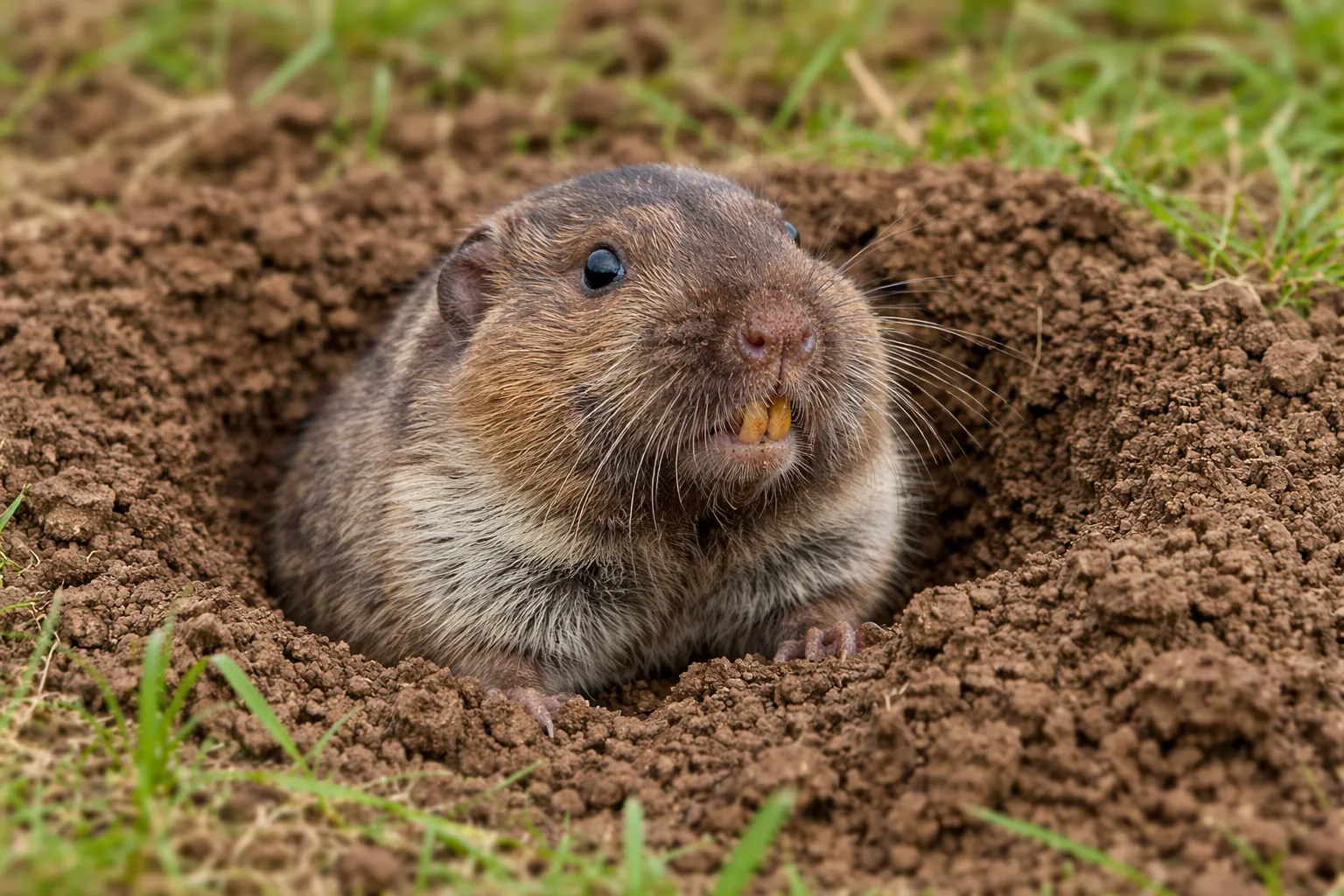
## What Animal is a Gopher?
**Scientific Classification:**
**Common Names:** Pocket gopher, gopher, ground gopher, salamander (regional)
## Gopher Animal Physical Characteristics
**Size and Build:**
**Specialized Features:**
## Gopher Animal Adaptations
**Underground Lifestyle Adaptations:**
**Feeding Adaptations:**
## Gopher Animal Behavior
**Territorial Nature:**
Each adult gopher maintains exclusive territory except during brief mating periods. Territory size depends on soil quality and food availability.
**Daily Activity:**
Gophers remain active year-round with no hibernation period. Activity peaks during mild weather when soil conditions optimize digging.
**Feeding Behavior:**
Strictly herbivorous diet consisting entirely of plant roots, bulbs, and underground stems. Gophers consume 60% of body weight daily.
**Reproduction:**
## Gopher Animal Habitat Requirements
**Soil Preferences:**
Well-drained soils including sandy loam, clay, and decomposed granite. Avoid extremely rocky or waterlogged areas.
**Food Source Requirements:**
Areas with abundant plant roots including lawns, gardens, agricultural crops, and natural vegetation.
**Climate Tolerance:**
Adapted to Mediterranean climate with mild, wet winters and warm, dry summers typical of California.
**Territory Size:**
Individual territories range from 200-2000 square feet depending on soil quality and food availability.
## Gopher Animal Life Cycle
**Birth to Weaning (0-6 weeks):**
Young remain in nesting chamber with mother, developing in underground safety.
**Juvenile Period (6 weeks-3 months):**
Young learn tunneling and feeding behaviors while establishing independence.
**Adult Territory Establishment (3-4 months):**
Mature gophers establish individual territories and begin reproduction.
**Adult Lifespan:**
Wild gophers typically live 1-3 years with mortality from predation, disease, and environmental factors.
## Gopher Animal Communication
**Chemical Communication:**
Scent marking establishes territory boundaries and attracts mates during breeding season.
**Vocal Communication:**
Limited vocalizations including distress calls and territorial warnings rarely heard above ground.
**Tactile Communication:**
Physical contact during mating and territorial disputes when gopher paths intersect.
## Predators of Gopher Animals
**Natural Predators:**
**Predator Avoidance:**
Underground lifestyle provides protection from most predators except those adapted for burrow hunting.
## Gopher Animal Environmental Impact
**Positive Impacts:**
**Negative Impacts:**
## Gopher Animal vs Other Species
**vs. Moles:** Gophers are rodents; moles are insectivores with different anatomy and diet
**vs. Ground Squirrels:** Gophers remain underground; ground squirrels are surface-active
**vs. Rats:** Gophers are specialized burrowers; rats are generalist surface dwellers
## Professional Gopher Animal Control
Understanding gopher biology improves control effectiveness:
**Species-Specific Methods:** Control techniques designed for gopher anatomy and behavior patterns
**Biological Knowledge:** Understanding reproduction and territory helps predict population growth
**Behavioral Insights:** Tunnel construction and feeding patterns guide trap placement strategies
**Seasonal Timing:** Knowledge of activity cycles optimizes treatment timing
## Gopher Animal Conservation Status
**Population Status:** Stable throughout California with no conservation concerns for most species
**Habitat Management:** Urban development reduces available habitat while creating ideal conditions in landscaped areas
**Human Conflict:** Primary management focus is property damage prevention rather than conservation
## Research on Gopher Animals
**Ecological Studies:** Research on gopher ecosystem roles and environmental relationships
**Control Method Development:** Scientific testing of humane and effective control approaches
**Population Dynamics:** Studies of gopher reproduction and territory establishment
The gopher animal represents a highly specialized mammal perfectly adapted for underground life. Understanding gopher biology and behavior helps property owners recognize when professional control is needed for effective, humane pest management.
Call 909-599-4711 for professional gopher animal control throughout Southern California. What Is a Gopher? | Gopher vs Mole | All Guides | Gopher Control ServiceRelated Resources
Do Gophers Bite · Do Gophers Come Out At Night · Do Gophers Hibernate · Does A Gopher Have A Tail · Gopher · Gopher Mound Size · Gopher Pictures · Gopher Rat