

GROUND SQUIRREL HOLES: IDENTIFICATION GUIDE
Ground squirrel holes are distinct from gopher holes and require different identification and control approaches. Understanding ground squirrel burrow systems helps property owners assess infestations and choose appropriate elimination methods.
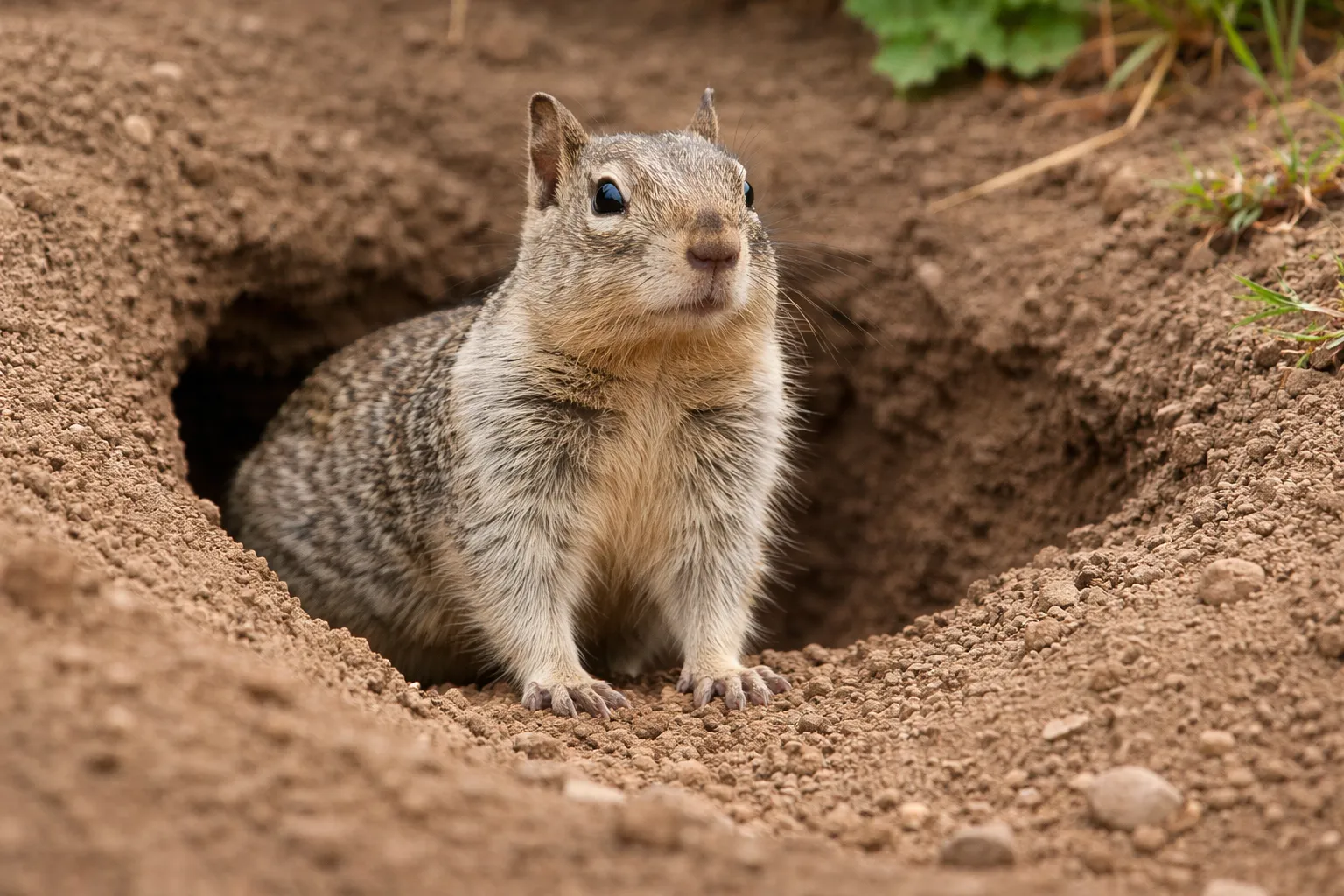
## Ground Squirrel Hole Characteristics
**Hole Size:** Ground squirrel holes are 2-4 inches in diameter, larger than gopher holes but smaller than rat burrows.
**Hole Condition:** Completely open with no soil plugs. Ground squirrels maintain clear entrance and exit points for rapid movement.
**Multiple Openings:** Each burrow system has 3-8 entrance holes connected by underground tunnels, providing escape routes from predators.
**Location:** Holes appear in open areas with good visibility including lawns, hillsides, fence lines, and areas near structures.
**Surrounding Area:** No soil mounds around holes. Ground squirrels carry excavated soil away from entrances, unlike gophers who push soil to the surface.
## Ground Squirrel Burrow Systems
**Tunnel Networks:** Underground burrow systems extend 5-30 feet with multiple chambers for nesting, food storage, and waste areas.
**Depth:** Main tunnels typically 2-4 feet underground with some chambers reaching 6 feet deep for protection and temperature regulation.
**Colony Structure:** Family groups share connected burrow systems with territorial boundaries maintained against other squirrel families.
**Entrance Design:** Holes often have worn trails leading from entrances where squirrels travel repeatedly between burrows and feeding areas.
## Ground Squirrel Holes vs Other Pest Holes
| Feature | Ground Squirrels | Gophers | Rats |
|---------|------------------|---------|------|
| Hole Size | 2-4 inches | 2-3 inches | 1-2 inches |
| Hole Condition | Open | Plugged | Open |
| Soil Mounds | None | Volcano-shaped | None |
| Multiple Holes | 3-8 per system | 1-2 per mound | 1-2 near structures |
| Location | Open areas | Anywhere | Near buildings |
| Visibility of Animals | Frequently seen | Never seen | Rarely seen |
## Identifying Active Ground Squirrel Holes
**Visual Confirmation:** Ground squirrels are active during daylight hours and frequently visible entering and exiting holes.
**Fresh Digging:** New excavation around hole edges indicates active use and potential burrow expansion.
**Worn Trails:** Paths between holes and feeding areas show current squirrel movement patterns.
**Droppings:** Small, dark pellets near hole entrances indicate recent squirrel activity.
**Food Storage:** Seeds, nuts, or plant material cached near entrances suggests active food gathering.
## Ground Squirrel Hole Damage
**Structural Undermining:** Extensive tunnel systems weaken foundations, patios, walkways, and retaining walls.
**Landscape Damage:** Root destruction from tunneling and surface foraging kills plants and disrupts irrigation systems.
**Safety Hazards:** Holes create trip hazards for people and pets, particularly in lawn areas and walkways.
**Property Aesthetics:** Multiple holes and worn trails damage property appearance and reduce curb appeal.
**Equipment Damage:** Lawn mowers and maintenance equipment can be damaged by hitting hidden holes or tunnel collapses.
## Ground Squirrel Hole Seasonal Patterns
**Spring Activity:** Emerging from winter dormancy, ground squirrels expand burrow systems and create new holes for breeding season.
**Summer Peak:** Maximum hole creation and burrow expansion during active foraging and food storage periods.
**Fall Preparation:** Intensive digging to expand food storage chambers and prepare burrows for winter protection.
**Winter Dormancy:** Reduced surface activity but holes remain open. Burrow systems provide protection during inactive periods.
## Professional Ground Squirrel Control
Ground squirrel holes indicate established colonies requiring comprehensive control approaches:
**Population Assessment:** Complete evaluation of colony size, burrow extent, and property damage to develop effective treatment strategies.
**Strategic Trapping:** Professional trapping programs target entire colonies using multiple trap types and placement strategies.
**Exclusion Installation:** Physical barriers prevent ground squirrel access to structures and high-value landscape areas.
**Habitat Modification:** Property changes reduce ground squirrel attraction and make areas less suitable for colony establishment.
## DIY Ground Squirrel Hole Management
**Hole Monitoring:** Regular inspection identifies new holes and tracks colony expansion across property areas.
**Exclusion Barriers:** Hardware cloth and fencing protect specific areas from ground squirrel access.
**Habitat Modification:** Removing cover, food sources, and nesting materials makes properties less attractive to ground squirrels.
**Safety Measures:** Fill inactive holes to eliminate trip hazards while active control eliminates the population.
## When Professional Control is Needed
**Large Colonies:** Multiple family groups with extensive burrow networks require professional assessment and elimination strategies.
**Property Damage:** Significant undermining, landscape destruction, or safety hazards need expert intervention.
**Ineffective DIY:** Failed homeowner control attempts often require professional methods and equipment.
**Prevention Programs:** Ongoing protection for properties adjacent to open space or recurring infestation sources.
Ground squirrel holes indicate active colonies that expand rapidly without professional intervention. Early identification and appropriate control prevent extensive property damage and safety hazards.
Call 909-599-4711 for professional ground squirrel assessment and control throughout Southern California. | All GuidesRelated Resources
Gopher Vs Ground Squirrel · Ground Squirrel · Ground Squirrel Trapping · Squirrels In California