

SQUIRRELS IN CALIFORNIA: COMPLETE SPECIES GUIDE
California is home to numerous squirrel species including ground squirrels that damage properties and tree squirrels that create nuisance issues. Understanding different squirrels in California helps property owners identify problem species and choose appropriate control methods.
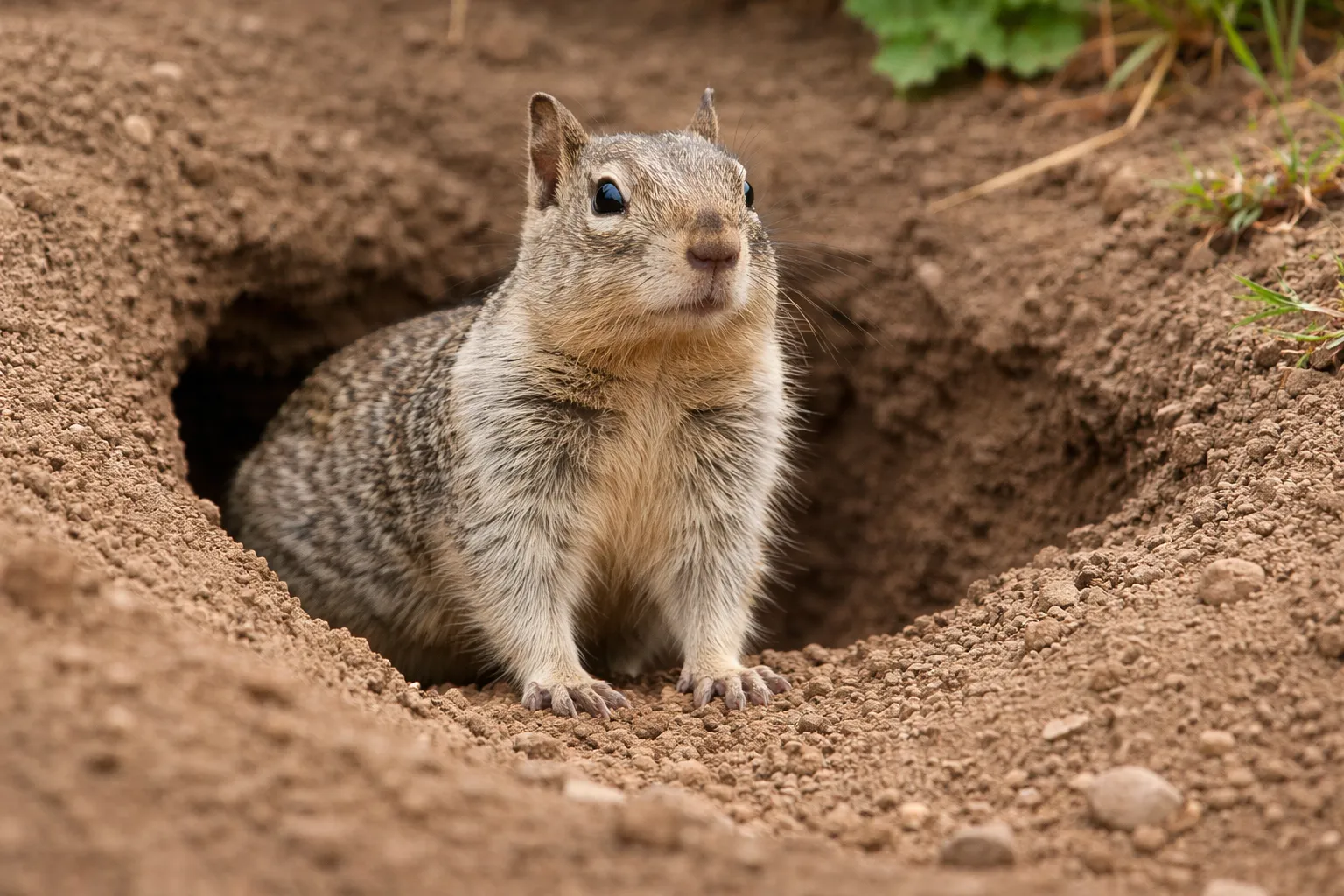
## Ground Squirrels in California
**California Ground Squirrel (Otospermophilus beecheyi):** Most common and destructive species throughout California. Creates extensive burrow systems that undermine structures and damage landscaping.
**Belding's Ground Squirrel:** Found in higher elevation areas of central and northern California. Less common in urban areas but can damage agricultural properties.
**Round-Tailed Ground Squirrel:** Desert species found in southeastern California. Adapted to arid conditions with different behavior patterns.
**Rock Squirrel:** Large ground squirrel species found in rocky areas and foothills throughout California.
## California Ground Squirrel Identification
**Size:** 9-11 inches long plus 5-9 inch tail, weighing 12-24 ounces
**Color:** Mottled brown and gray with lighter belly
**Features:** Prominent ears, bushy tail, strong claws for digging
**Behavior:** Live in family colonies with complex burrow networks
**Activity:** Diurnal (active during daylight) with seasonal hibernation patterns
## Tree Squirrels in California
**Western Gray Squirrel:** Native California tree squirrel with silver-gray coloring and large bushy tail. Found in oak woodlands and urban areas with mature trees.
**Fox Squirrel:** Non-native species established in urban areas. Larger than gray squirrels with rusty coloring and very bushy tail.
**Eastern Gray Squirrel:** Introduced species common in parks and residential areas throughout California.
**Douglas Squirrel (Chickaree):** Small, native tree squirrel found in coniferous forests of northern California.
## Ground vs Tree Squirrels: Key Differences
| Feature | Ground Squirrels | Tree Squirrels |
|---------|-----------------|----------------|
| Habitat | Underground burrows | Trees and elevated structures |
| Damage | Burrow undermining | Attic invasion, bird feeder raids |
| Visibility | Frequently visible on ground | Visible in trees and on structures |
| Social Structure | Colony living | Individual or paired |
| Control Needs | Property damage prevention | Nuisance behavior management |
## Squirrel Damage in California
**Ground Squirrel Damage:**
**Tree Squirrel Damage:**
## California Squirrel Habitat Preferences
**Urban Ground Squirrels:**
**Urban Tree Squirrels:**
## Seasonal Squirrel Activity in California
**Spring Activity (March-May):**
**Summer Activity (June-August):**
**Fall Activity (September-November):**
**Winter Activity (December-February):**
## Professional Squirrel Control in California
**Ground Squirrel Control:**
**Tree Squirrel Management:**
## California Squirrel Species by Region
**Southern California:**
**Central California:**
**Northern California:**
## Legal Considerations for Squirrel Control
**Protected Status:** Most California tree squirrels have some legal protections requiring humane control methods.
**Ground Squirrel Control:** California ground squirrels are not protected and can be controlled when causing property damage.
**Municipal Regulations:** Local ordinances may restrict control methods in urban areas requiring professional assessment.
**Humane Requirements:** California law requires humane treatment of all wildlife species during control operations.
## Integrated Squirrel Management
**Assessment:** Professional evaluation determines squirrel species, population levels, and appropriate control approaches.
**Prevention:** Habitat modification and exclusion reduce squirrel attraction and access to problem areas.
**Control:** Species-specific elimination or deterrent methods based on squirrel type and damage patterns.
**Monitoring:** Ongoing assessment ensures long-term squirrel management success.
## Why Professional Squirrel Control Works
**Species Expertise:** Understanding different California squirrel species ensures appropriate control methods.
**Legal Compliance:** Professional services navigate California wildlife regulations and municipal requirements.
**Comprehensive Approach:** Complete assessment addresses all squirrel activity rather than just visible damage.
**Guaranteed Results:** Professional confidence in species-specific control backed by service guarantees.
California's diverse squirrel species require specialized knowledge for effective management. Professional identification and species-appropriate control ensure successful long-term squirrel management while complying with state wildlife regulations.
Call 909-599-4711 for professional squirrel identification and control throughout California. | All GuidesRelated Resources
Gopher Vs Ground Squirrel · Ground Squirrel · Ground Squirrel Holes · Ground Squirrel Trapping