

PICTURE OF A GOPHER: VISUAL IDENTIFICATION GUIDE
Pictures of gophers help property owners identify these underground pests and distinguish them from other burrowing animals. Visual identification is essential for choosing appropriate control methods.
## What Gophers Look Like
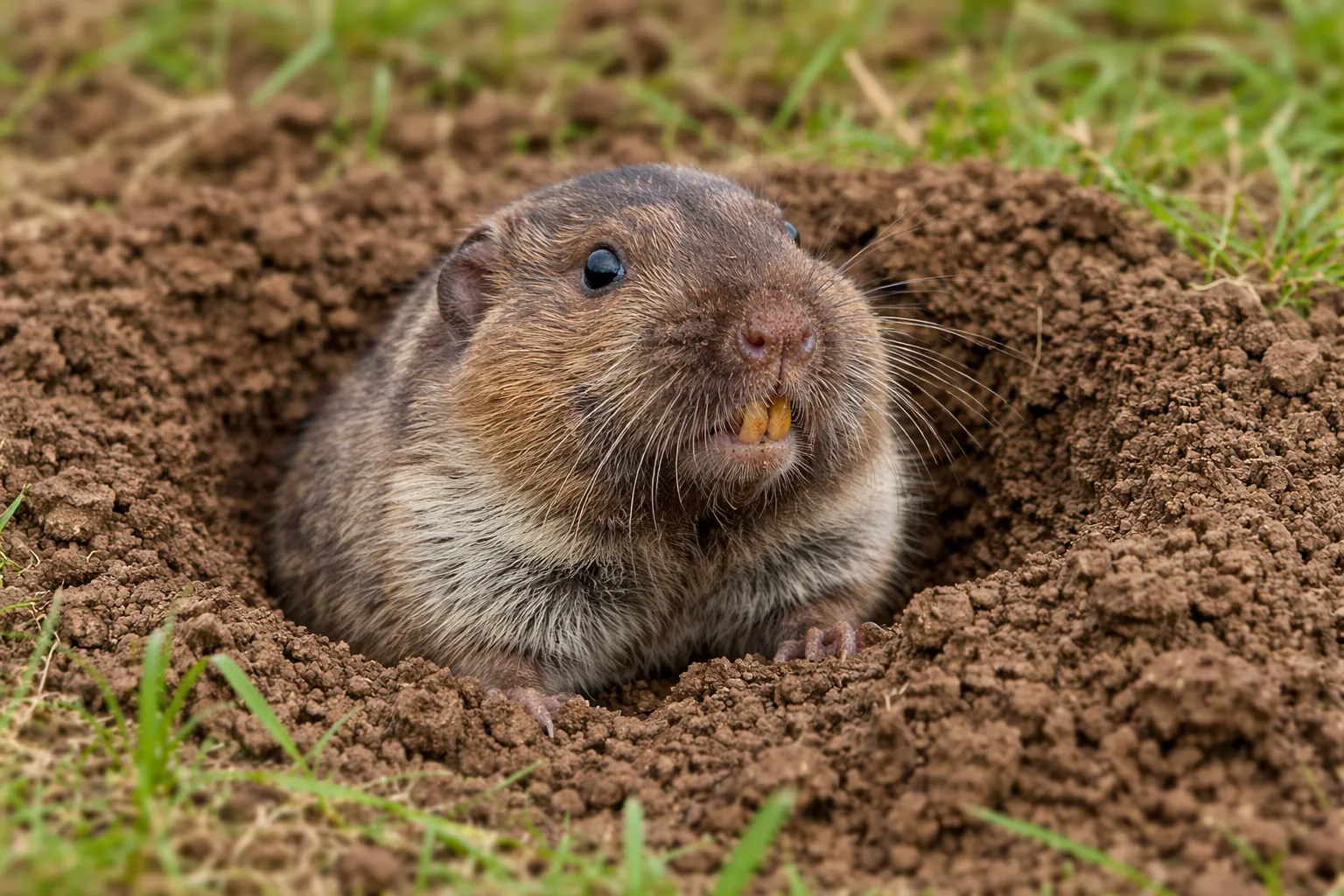
**Body Shape:** Compact, cylindrical body designed for underground tunnel living
**Size:** 6-10 inches long with 2-4 inch tail
**Weight:** 2-5 ounces depending on species and age
**Color:** Brown to gray fur that often matches local soil color
**Eyes:** Small, dark eyes positioned high on the head
**Ears:** Tiny external ears barely visible in most pictures
## Key Features in Gopher Pictures
**Large Front Teeth:** Prominent orange-colored incisors used for digging and cutting roots
**Powerful Claws:** Oversized front claws designed for soil excavation
**Small Tail:** Short, nearly hairless tail used for underground navigation
**Dense Fur:** Velvety coat that doesn't mat when moving through soil
**Compact Build:** No wasted body parts - everything optimized for tunneling
## Pictures of Gopher Damage
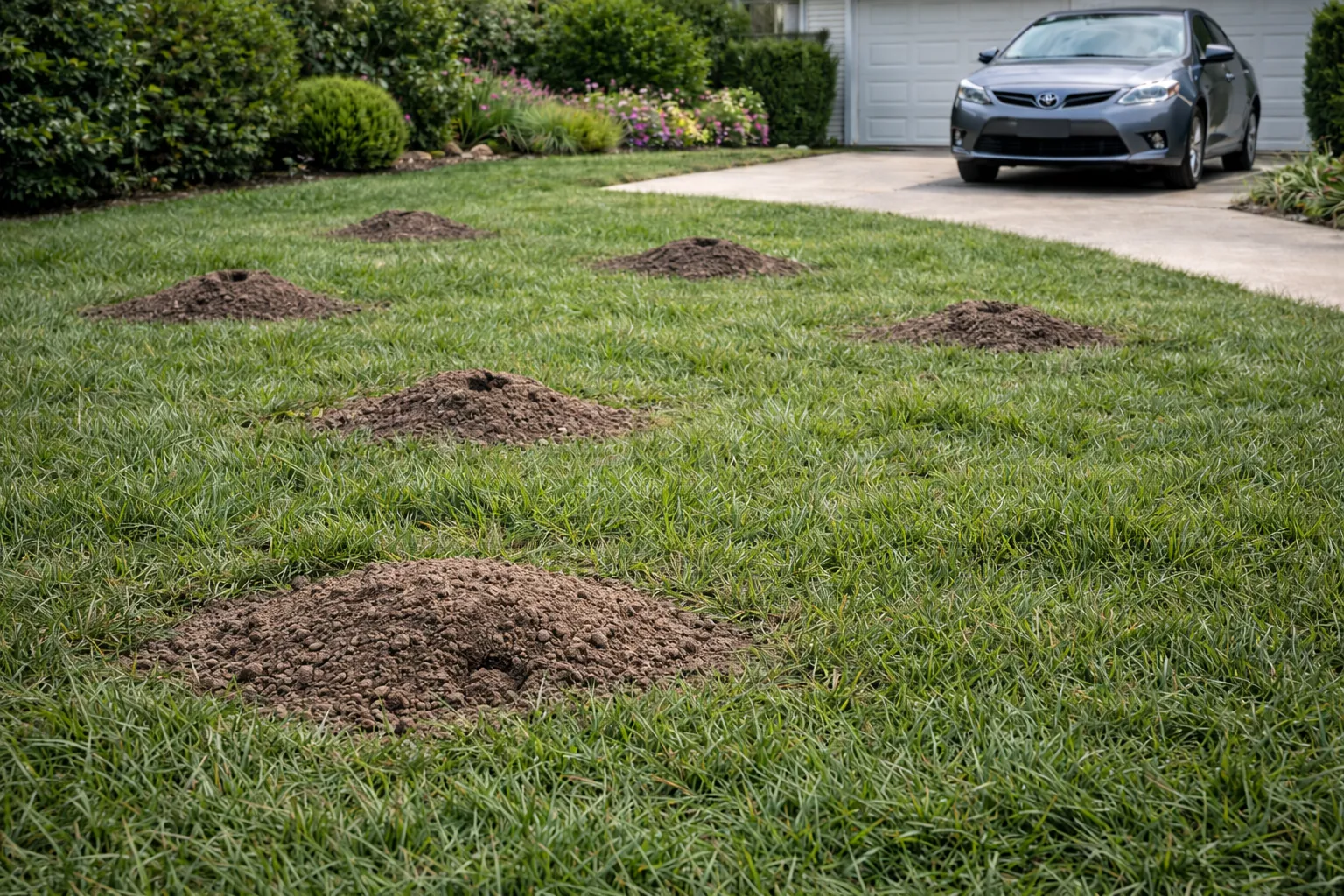
**Soil Mounds:** Volcano-shaped piles of fine soil with plugged holes off to one side
**Dead Plants:** Wilted or missing plants where roots have been consumed underground
**Lawn Damage:** Brown patches and raised ridges indicating tunnel systems
**Tree Damage:** Declining trees with damaged root systems from gopher feeding
## Gopher vs. Other Animals in Pictures
**Picture Differences from Moles:**
**Picture Differences from Ground Squirrels:**
**Picture Differences from Rats:**
## Seasonal Gopher Appearance
**Spring Pictures:** Gophers may appear slightly larger after winter feeding and before breeding season activity increases.
**Summer Pictures:** Peak activity period when gopher pictures show animals in prime condition with full, dense coats.
**Fall Pictures:** Continued activity as gophers prepare food storage for winter months.
**Winter Pictures:** Reduced surface activity but gophers remain active in tunnels during California's mild winters.
## Pictures of Gopher Species in California
**Botta's Pocket Gopher:** Most common species throughout Southern California. Brown to gray coloration with stocky build.
**Northern Pocket Gopher:** Mountain species with denser fur and slightly different coloration patterns.
**San Diego Pocket Gopher:** Limited range with unique characteristics adapted to coastal conditions.
## Using Pictures for Gopher Identification
**Damage Assessment:** Pictures of soil mounds and plant damage help confirm gopher activity versus other pests.
**Species Confirmation:** Visual identification ensures appropriate control methods for local gopher species.
**Activity Monitoring:** Pictures document gopher damage progression and help track control effectiveness.
**Professional Consultation:** Clear pictures of damage and suspected gophers help professionals assess treatment needs.
## Taking Pictures of Gopher Evidence
**Soil Mounds:** Photograph characteristic volcano shape and plugged hole location for identification purposes.
**Plant Damage:** Document wilted plants and root damage patterns that indicate underground feeding.
**Tunnel Systems:** Pictures of raised ridges and soft soil areas show tunnel extent and activity levels.
**Fresh Activity:** New mounds and recent damage pictures help professionals determine current gopher population levels.
## Professional Gopher Photo Analysis
Experienced technicians can evaluate gopher pictures to determine:
**Species Identification:** Gopher type based on physical characteristics and geographic location
**Population Assessment:** Damage extent and mound patterns indicate territory size and gopher numbers
**Activity Level:** Fresh damage versus old damage helps plan treatment timing and methods
**Control Strategy:** Pictures help develop appropriate elimination approaches for specific situations
## Why Visual Identification Matters
**Treatment Accuracy:** Correct gopher identification ensures effective control methods rather than inappropriate techniques for other pests.
**Cost Effectiveness:** Accurate diagnosis prevents wasted effort on wrong treatments or unnecessary services.
**Safety Considerations:** Species-specific knowledge helps select safest elimination methods for families and pets.
**Success Prediction:** Understanding local gopher characteristics improves control success rates and guarantee confidence.
Pictures of gophers provide essential identification information for property owners dealing with underground damage. Visual confirmation helps ensure appropriate professional treatment for effective, permanent gopher elimination.
## Related Services
Related Resources
Do Gophers Bite · Do Gophers Come Out At Night · Do Gophers Hibernate · Does A Gopher Have A Tail · Gopher · Gopher Animal · Gopher Mound Size · Gopher Pictures