

RODENT GOPHER: UNDERSTANDING POCKET GOPHERS
Rodent gophers, properly called pocket gophers, are specialized burrowing mammals that spend their entire lives underground. These small rodents create extensive tunnel systems that damage lawns, gardens, and landscaping throughout California.
## What is a Rodent Gopher?
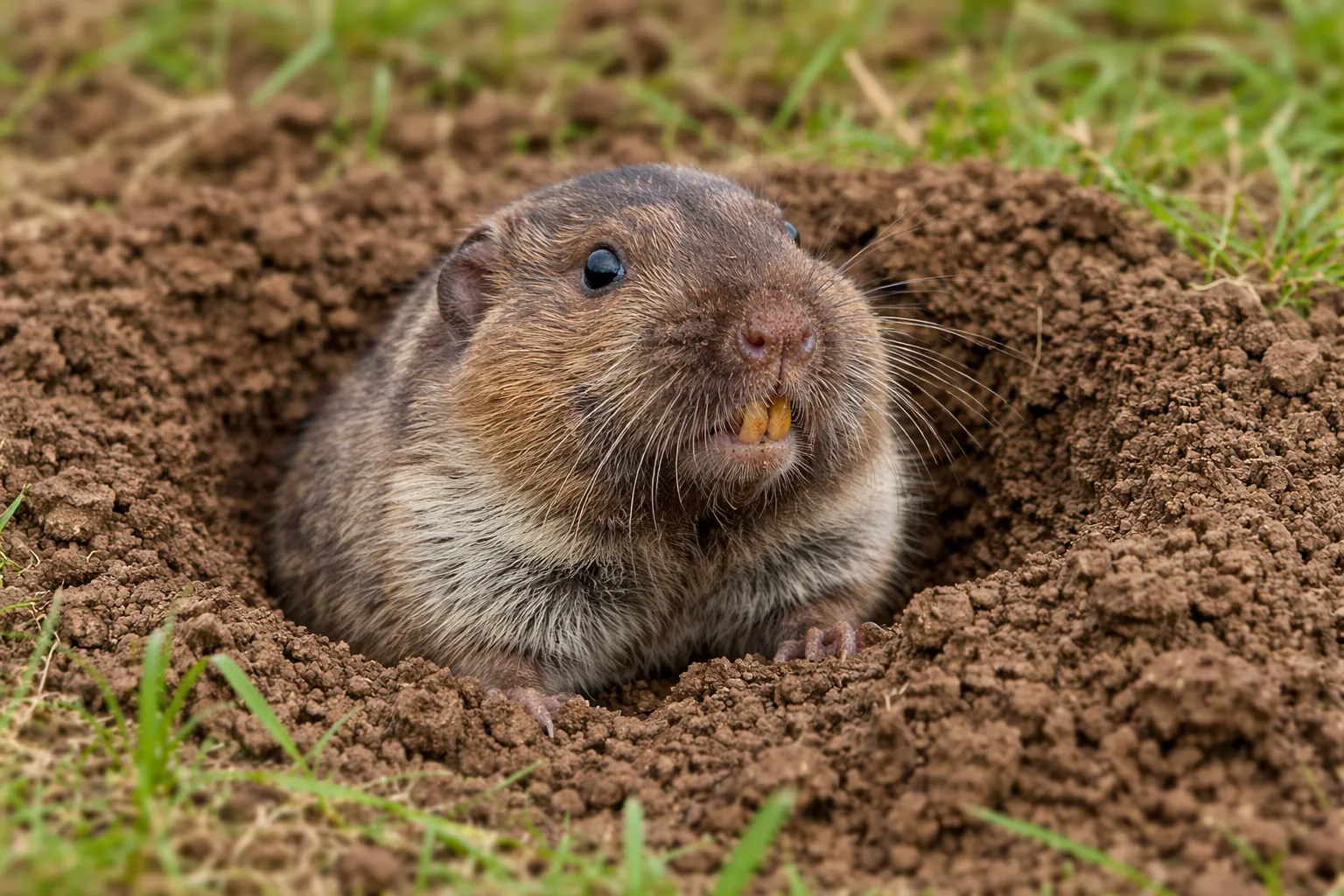
Pocket gophers are the rodents commonly called "gophers" throughout California. They belong to the family Geomyidae and are distinct from other rodent species like rats, mice, and squirrels.
**Scientific Classification:**
**Why Called "Pocket" Gophers:** These rodent gophers have specialized cheek pouches (pockets) for carrying food back to their underground storage chambers.
## Rodent Gopher Physical Characteristics
**Size:** 6-10 inches long plus 2-4 inch tail, weighing 2-5 ounces
**Body:** Compact, cylindrical shape adapted for tunnel living
**Eyes:** Small and positioned high on head for underground navigation
**Ears:** Tiny external ears that don't interfere with burrowing
**Teeth:** Large, prominent front incisors for digging and cutting roots
**Claws:** Powerful front claws designed for excavation
**Fur:** Dense, velvety coat that doesn't mat when moving through soil
## How Rodent Gophers Differ from Other Rodents
**vs. Rats:** Gophers stay underground and create soil mounds; rats live above ground and in structures
**vs. Mice:** Gophers are larger, live underground, and create tunnel systems; mice are smaller surface dwellers
**vs. Ground Squirrels:** Gophers remain underground; ground squirrels are visible above ground daily
**vs. Tree Squirrels:** Gophers are subterranean; tree squirrels live in trees and are highly visible
## Rodent Gopher Behavior Patterns
**Underground Lifestyle:** Pocket gophers spend 99% of their lives underground, emerging only briefly to mate or disperse to new territories.
**Tunnel Construction:** Create extensive networks with main runs, feeding tunnels, nesting chambers, and food storage areas.
**Territorial Nature:** Each adult gopher maintains its own territory except during mating season in spring.
**Activity Timing:** Active year-round in California's mild climate with peak activity during spring and fall.
## Rodent Gopher Damage Identification
**Soil Mounds:** Volcano-shaped piles of fine soil pushed up from underground excavation. Fresh mounds appear daily during active periods.
**Plant Damage:** Roots, bulbs, and underground plant structures consumed from below ground. Plants may suddenly wilt or disappear.
**Lawn Destruction:** Brown patches where tunnel construction severs grass root systems. Soft, spongy areas from soil loosening.
**Tree Damage:** Root consumption can kill mature trees and expensive landscape plants.
## Rodent Gopher Diet and Feeding
Pocket gophers are herbivorous rodents feeding exclusively on plant material:
**Daily Consumption:** A single rodent gopher consumes 60% of its body weight daily in plant material.
## Rodent Gopher Reproduction
**Breeding Season:** Primary breeding occurs in spring (March-May) in California
**Gestation:** 18-19 days
**Litter Size:** 3-4 offspring per litter
**Annual Litters:** 2-3 litters per year under favorable conditions
**Maturity:** Young reach reproductive maturity at 3-4 months
## Geographic Distribution of Rodent Gophers
**California Range:** Throughout the state from sea level to high mountain elevations
**Soil Preferences:** Well-drained soils including sandy loam, clay, and decomposed granite
**Habitat Requirements:** Areas with adequate vegetation for food and suitable soil for tunneling
**Urban Adaptation:** Thrive in landscaped residential and commercial properties
## Professional Rodent Gopher Control
Understanding rodent gopher biology and behavior is essential for effective control:
**Species Identification:** Confirming pocket gopher presence versus other burrowing pests ensures appropriate treatment methods.
**Behavior-Based Control:** Treatment strategies based on gopher biology achieve better results than generic pest control approaches.
**Seasonal Timing:** Control efforts timed to gopher activity patterns maximize effectiveness and minimize retreatment needs.
**Chemical-Free Methods:** Mechanical trapping and carbon monoxide treatment eliminate gopher populations safely.
## Why Professional Control Works
**Expertise:** Understanding rodent gopher biology, behavior, and tunneling patterns improves control success rates.
**Equipment:** Professional-grade traps and tools designed specifically for pocket gopher elimination.
**Comprehensive Approach:** Complete property assessment addresses entire gopher populations, not just visible damage areas.
**Guaranteed Results:** Professional confidence in permanent gopher control backed by service guarantees.
Rodent gophers are highly specialized mammals requiring species-specific control knowledge for effective elimination. Their underground lifestyle and rapid reproduction make professional intervention essential for permanent results.
## Related Services
Related Resources
Do Gophers Bite · Do Gophers Come Out At Night · Do Gophers Hibernate · Does A Gopher Have A Tail · Gopher · Gopher Animal · Gopher Mound Size · Gopher Pictures